
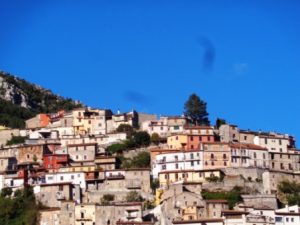



CAPISTRELLO
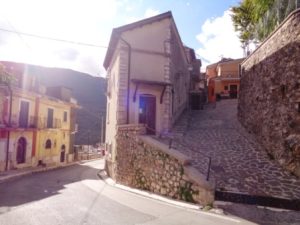
Scorcio di Capistrello oggi. (Immagine personale)
In the case of Capistrello, answering the question of what to see is fairly easy. As mentioned in the general description, Capistrello has many virtues, and these concern the numerous things to observe and do.
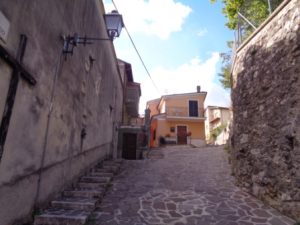
Scorcio di Capistrello oggi. (Immagine personale)
A superficial description isn’t enough to convey the sense of wonder of this place, especially when you wander the steep streets of the old town or the mountain trails around Capistrello. Today, the town is a concentration of extremely rich history and nature.
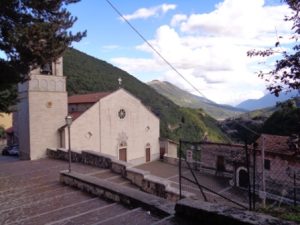
La chiesa di S. Antonio da Padova, cuore del centro
storico di Capistrello. (Immagine personale)
From a historical perspective, Capistrello, despite the various urban transformations it has undergone over the last century, especially in the 1930s, has maintained a medieval structure in its old part made up of narrow, steep streets, which are concentrated around the historic church of Sant’ Antonio da Padova.
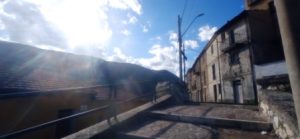
Scorcio di Capistrello oggi. (Immagine personale)
Here there are numerous examples of historic buildings, including the beautiful Palazzo Lusi, a historic Renaissance palace.
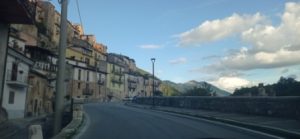
Scorcio di Capistrello presso via Sallustio. (Immagine personale)
Moving towards Via Sallustio, we can admire an unparalleled panorama as we gaze down towards the Capistrello Gorge, which in my opinion represents the town’s true wealth, but we’ll talk about this later.
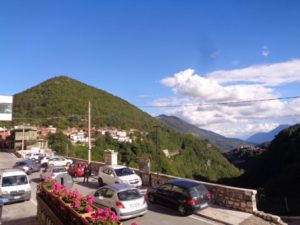
Il belvedere di Via Sallustio a Capistrello. (Immagine personale)
Moving towards the more modern area, we enter the present-day town, made up of wide, well-maintained streets with public greenery, with several gardens suitable for families and individuals for daily refreshment. Above all, we observe some particularly important monuments that recall the recent history of the last 150 years.
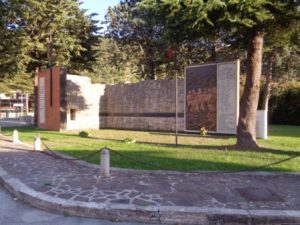
Sacrario a ricordo dei 33 pastori uccisi qui nel 1944 dai Tedeschi. (Immagine personale
Particularly moving is the monument inaugurated in 1963 at the nearby train station, which commemorates the Nazi massacre of 30 poor shepherds perpetrated in June 1944. This monument is very important because it brings to light a recent history of great pride.
The Capistrello massacre is one of the ugliest episodes of the Nazi occupation of Marsica, but it also conceals the Nazis’ profound frustration with the people of Marsica. Despite the harshness of the times, they managed to stand up to these criminals through their indomitable behavior. By day, they showed compliance, but by night, they showed complete contempt for these people. This behavior was not only expressed through absolute silence in defense of those working to liberate the area from the German barbarians, but above all, toward the many young men who escaped from the Avezzano concentration camp, kept hidden and fed by the local population, who protected them in mountain shelters at the cost of their own lives.
Capistrello was awarded the Gold Medal for Civil Merit by President Ciampi in 2004, both for the resistance she demonstrated and for the serious incidents that occurred on the German side, precisely for her shining example of spirit of sacrifice and love of country.
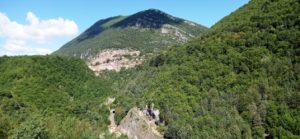
La Gola di Capistrello oggi. (Immagine personale)
But the true treasure of Capistrello, in my opinion, is the Capistrello Gorge, which can be seen from the Via Sallustio lookout. This gorge represents a concentration of history and nature of great importance.
Historical highlights include the final section of the Claudius Emissary, a monumental hydraulic work from the Roman era, renovated in the 19th century to allow the Fucino basin’s waters to flow again via the new Torlonia Emissary.
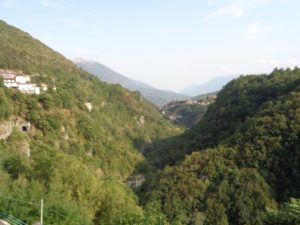
La gola di Capistrello vista da Pescocanale. (Immagine personale)
The construction of the great Torlonia emissary in the 19th century allowed for the partial restoration of the Conduit of Claudius, especially its final section near Capistrello, where the lake waters still flow into the Liri River in the form of waterfalls.
The observation route of this monumental work can be followed by moving from Capistrello towards the Liri River, or rather, towards the Capistrello Gorge, where, in addition to this work, there are many other cultural treasures, such as the fresco of the Madonna of the Waterfall.
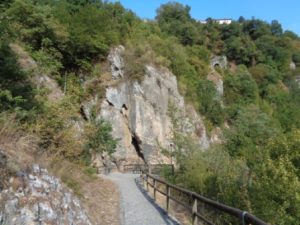
Parete di roccia calcarea che costituisce la
struttura di tutta la gola di Capistrello. (Immagine personale)
Crossing this passage toward the exit of the Torlonia effluent, you’ll also observe the flourishing nature present along the entire route, expressed not only through the views of the Liri River, the various plants and fauna present, and the effluent waterfall, but above all through the monumental limestone rock faces, which make this place a magical place of great geological importance.
In this location, a short distance from the Torlonia effluent, stands another great 19th-century work, masterfully constructed by the inhabitants of Capistrello. We’re talking about the Capistrello railway section, part of the Avezzano-Roccasecca railway built at the end of the 19th century.
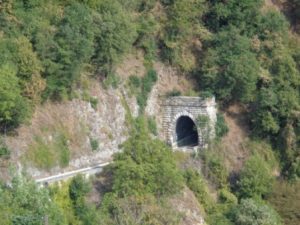
Una delle gallerie ferroviarie appartenenti al
sistema elicoidale di Capistrello. (Immagine personale)
This major railway project, located in the Capistrello section, features the stunning helical tunnel, a system of Abruzzo railway tunnels located along the Avezzano-Roccasecca railway. Seeing and experiencing this work is easy; just take the local train and enjoy the ride.
Unfortunately, to better appreciate this magnificent railway project, Capistrello lacks a railway museum that can provide a comprehensive and detailed explanation of its construction and what it has meant and represents for the town.
From a naturalistic perspective, Capistrello, in addition to its stunning gorge, offers a unique wealth of mountains and plateaus, which surround the town and are a concentration of various types of trees.
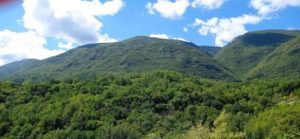
Le montagne attorno a Capistrello. (Immagine personale)
The areas around Capistrello offer the ideal setting for mountain hikes, allowing anyone to enjoy the magnificent scenery created over geological time.
Such beautiful and lush nature is rare to see, thanks in part to the developed karst system, which provides a significant supply of water in the form of small springs scattered across the local mountains.
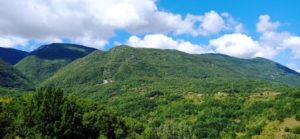
Le montagne attorno a Capistrello. (Immagine personale)
Walking the many trails through nature offers the opportunity to experience it in an authentic and profound way. It’s difficult to describe these things in a few lines of text and a few photos; to truly appreciate them, you have to experience them, first by coming here and then by going there.
So come to Capistrello and recharge your batteries with nature, you won’t regret it!!!