
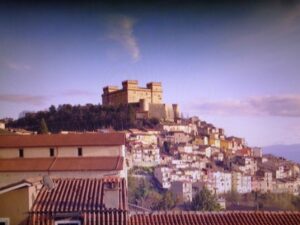
Celano is the second most populous locality in all of Marsica after Avezzano and boasts a long and glorious history that has made it one of the most important centers in all of Marsica’s history between the Middle Ages and the present day.
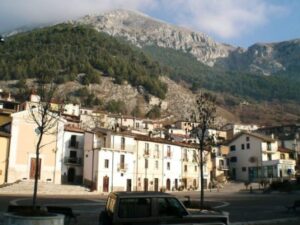
Monte La Serra visto da Celano. (Immagine personale)
Celano is located on the slopes of Mount La Serra at an altitude of 860 m. above sea level and is situated in a dominant position north of the Piana del Fucino. The view of Celano on the Piana del Fucino is magnificent, the panorama is fantastic. An equally fantastic panorama can be admired from Fucino, looking towards Celano which is set like a pearl within the Velino-Sirente mountain ridge.
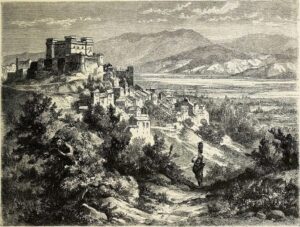
Celano nel 1840. Il lago Fucino sullo sfondo.
For centuries Celano has enjoyed a mild and sweet climate, thanks to its proximity to the great Lake Fucino. Since the lake was drained at the end of the 19th century, the climate has changed, giving rise to a more continental climate with a mountainous character. However, if you come to Celano you still perceive a pleasant climate that makes you want to stay in the country.
As mentioned, the history of Celano is very rich in situations, as the town has always been at the center of numerous events, which have made it one of the most important villages in the Marsican area. Celano was born in another place not far from the current one in the 10th century as a mountain fief originated by the dynasty of the Counts of the Marsi for control of the northern territory of Lake Fucino.
The fortress existed until 1223, when the clash between Tommaso Berardi, Count of Celano and the Emperor Frederick II led to the defeat of the Count of Celano and the destruction of the fortress.
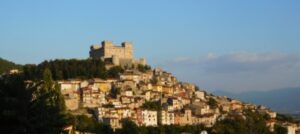
Celano oggi. (Immagine personale)
Subsequently in 1227 Celano was rebuilt in its current location and over time the town around which the village was structured and the construction of solid walls which have now partially disappeared .
During the 15th and 16th centuries, the town thus reborn became a great protagonist in the history of Marsica and of all strengthened militarily with the construction of a large castle, located at the top of the town, southern Italy, governed largely first by the Berardis and then by the Piccolominis.
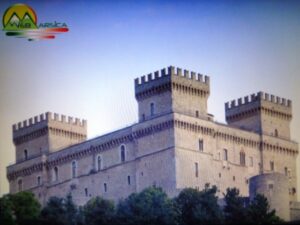
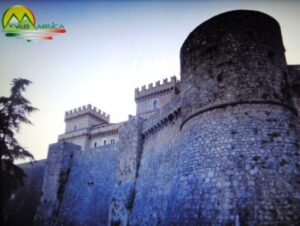
Il castello di Celano oggi. (Immagini personali)
Celano was therefore the seat of a large and important county, which at the time appeared to be one of the most important fiefdoms in all of southern Italy both for the economic wealth that also came from having an enormous underlying lake, and for the political centrality that it derives from being a borderland between the Neapolitan territory and the Papal State. Celano is therefore both a large political center and an important economic centre.
On an economic level, the validity of Celano in the 15th and 16th centuries was above all in the production of sheep’s wool and then, after the Middle Ages, it established itself between the 19th and 20th centuries as an important industrial economic center linked to the fruit and vegetable production of the products of the Piana of the Fucino.
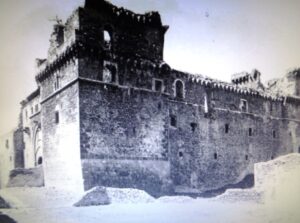
Il castello di Celano dopo il sisma del 1915
Celano over time has known several natural disasters due to many earthquakes that have occurred over time, of which the most devastating was the earthquake of Gioia dei Marsi in 1915. Many people died in this earthquake and the town was partially destroyed by the shock.
But thanks to a great fortitude, the town got back on its feet and rebuilt itself on a building, social and industrial level, becoming one of the economic engines of the economic boom of Marsica in the 80s of the twentieth century.
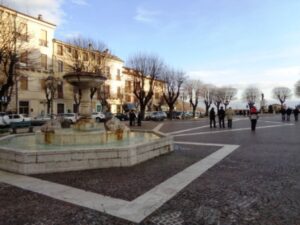
La piazza centrale di Celano oggi.
Over the past 30 years Celano has restructured itself once again as an important tourist centre, becoming a powerful economic attraction for the entire Marsica. Here the town has rediscovered its medieval identity and has made it grow through various initiatives, such as the development of its museums.
In fact, important museums are located in Celano, such as the Museo della Marsica present in the castle of Celano which includes two important sections, one of Sacred Art and the other of Roman culture linked to the vision of the Torlonia Collection.
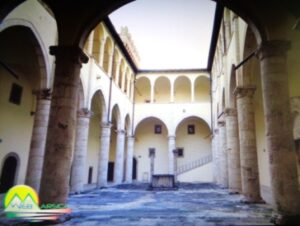
Cortile interno del castello e museo della Marsica. (Immagine personale)
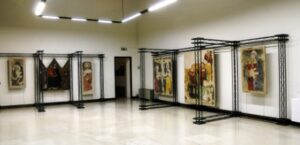
Una delle sale della sezione di Arte Sacra del Museo della Marsica. (Immagine personale)
Another important museum is the Le Paludi Museum located just outside the town near the Piana del Fucino.
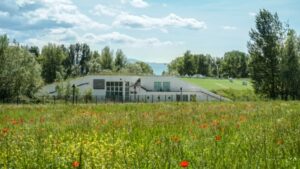
Museo Le Paludi di Celano. (Immagine personale)
Here in the 1980s the remains of an ancient settlement dating back to 3000 BC were found. The settlement was left as it was and a large museum was built around it, the marshes museum, which in addition to being important because it contains very important archaeological finds is also beautiful for its structure built with avant-garde architecture which for that alone is worth a visit. The museum complex then also became a very important center for the restoration of ancient art, one of the largest in Abruzzo.
Another important attraction of the town are the numerous churches present which are a real museum and cover all periods from the medieval to the present
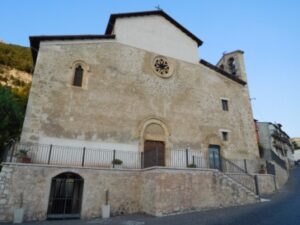
Chiesa di San Francesco del XIV secolo . (Immagine personale)
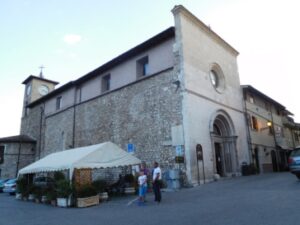
Chiesa di Santa Maria delle Grazie dell’XI secolo. (Immagine personale)
However, like all the villages of Marsica, the strong point of the town is certainly its fairytale landscape and its unspoiled nature. From Celano you can set out to discover the numerous naturalistic attractions that distinguish this part of Marsica.
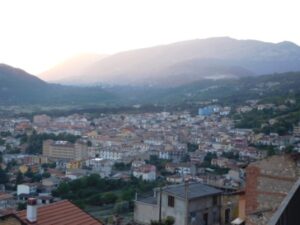
Veduta panoramica di Celano oggi. (Immagine personale)
There are in fact numerous nature trails for hiking and trekking lovers starting with the discovery of Monte La Serra which dominates the town,
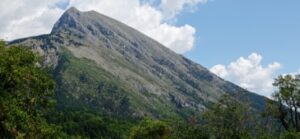
Monte La Serra visto da Santa Jona. (Immagine personale)
but above all you must visit the marvelous Celano Gorges, a real canyon, structured over the course of hundreds of thousands of years by the force of the water, which day after day eroded the rock to create a gorge of a few hundred meters overhang.
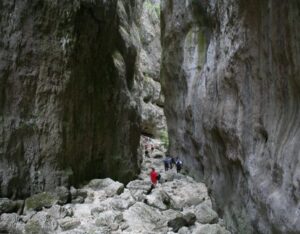
Le Gole di Celano.
In this regard, we recommend a visit in the summer when there are no great dangers due to the water, but it is advisable to have the right equipment in order not to run into various dangers such as small pebbles that can fall from the ridges and hurt. Other important attractions are the various sources present both in Celano and in its surroundings, such as the source of San Francesco present inside Celano.
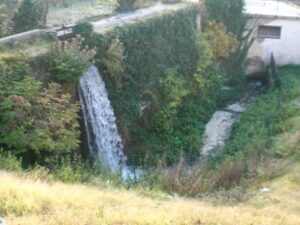
Sorgente San Francesco. (Immagine personale)
Then there are the remains of various convents and castles around the town such as the ruins of the ancient fortress of Celano from the 11th century, or the remains of the Hermitage of San Marco, etc.
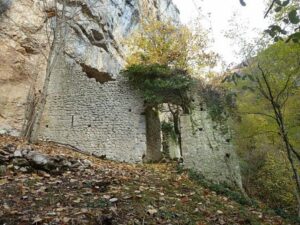
Eremo di San Marco. (Immagine da https://turismo.comune.celano.aq.it/contenuti/189559/monastero-celestiniano-san-marco-foci)
Coming to Celano is then a feast for the palate given the rich and substantial cuisine that can be enjoyed by entering any of the many restaurants in the town. Here the gastronomic products are all local, ranging from meat to vegetables to fruit.
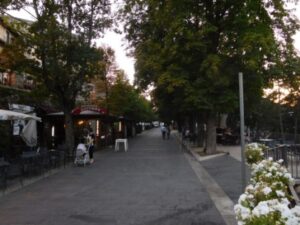
Una delle vie notturne di locali di Celano. (Immagine prsonale)
In fact, the Celano area boasts a long tradition of animal breeding and fruit and vegetable production, one of the richest and most complete in all of central Italy. The best time to visit Celano is always, in all 365 days of the year given the richness of the territory, but certainly in the summer you also have the opportunity to participate in the numerous local festivals that are present here throughout the summer and which ranging from patronal feasts to secular ones.
So come to Celano and you won’t regret it!!!
CELANO
_____________________________________