


SAN POTITO
INTRODUCTION AND BRIEF HISTORY OF SAN POTITO
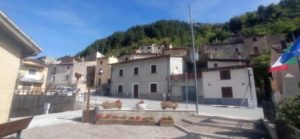
Scorcio di San Potito oggi. (Immagine personale)
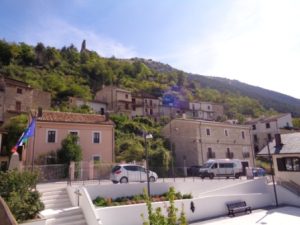
San Potito is a hamlet in the municipality of Ovindoli (AQ), home to about a hundred people, rising to 300 in the summer months. San Potito is a village with clear medieval origins, established during the Lombard era, and the ruins of its castle are the most important evidence of its history.
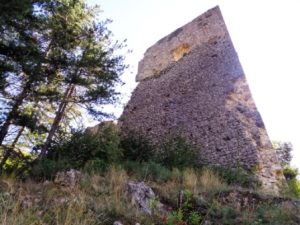
Resti del castello di San Potito. (Immagine personale)
But San Potito is a site that has proven to have a history much older than the medieval one, dating back to Roman times. This was confirmed by the major excavation campaign of 1983-2000, which brought to light a large imperial villa dating back to the 2nd century AD, which was reburied in 2014 for better protection.
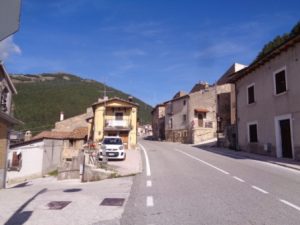
Scorcio di San Potito oggi. (Immagine personale)
From the Middle Ages until the 16th century, San Potito was a fortified village, part of the defensive system of the County of Celano. Its population was primarily engaged in grazing livestock, subsistence farming, and small-scale crafts. In the 16th century, political and military conditions changed, leading to the decline of the town’s strategic military status. San Potito became a simple mountain village, with its population dedicated entirely to sheep farming, local agriculture, and small-scale crafts, especially woodworking.
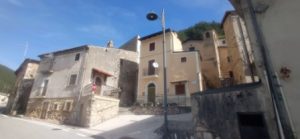
Scorcio di San Potito antica. (Immagine personale)
This situation, exacerbated by the harsh mountain climate and the problem of banditry, which was widespread in the area, especially between the 18th and 19th centuries, meant a harsh existence for the inhabitants of the small village. Since the unification of Italy, the situation has slowly improved, first with the disappearance of banditry, which was destroyed between 1860 and 1870, and then with a slow transformation of the area, made more livable thanks to significant improvements in transport routes, which have lifted the village from the isolation it had endured for centuries.

Terremoto di Gioia dei Marsi del 13 gennaio 1915
After the catastrophic Gioia dei Marsi earthquake of 1915, which also hit the area hard, and following the years of World War I, the town began to recover and rebuild, following the path of development that preceded the 1915 earthquake. This led to a slow reconstruction of San Potito, which continued with ups and downs throughout the 1920s and 1930s, which also led to the very first development of tourism.
In practice, in the 1930s, the first winter ski slopes were created in Ovindoli, the municipality to which San Potito belongs. These brought the first tourists to the area, especially from Rome, and the municipality embarked on a new economic path with the emergence of the tourism industry. Within a few years, hotels opened where there had previously been none, thus triggering an initial, albeit fragile, return to employment, which also affected San Potito slightly.
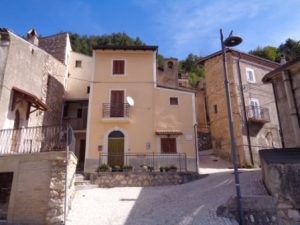
Scorcio di San Potito antica. (Immagine personale)
This initial touristic development was interrupted by the Second World War, only to resume after this period. Unfortunately, tourism development in the mountain area was slow and complex before it took off, resulting in a prolonged period f stagnation for local development. In all of this, San Potito found itself conomically crushed, and the population, dependent solely on agriculture, was unable to survive. This led to the village’s abandonment between the 1950s and 1970s by young people, who fled abroad and then to the major Italian cities of Milan, Turin, and especially Rome, given its proximity.
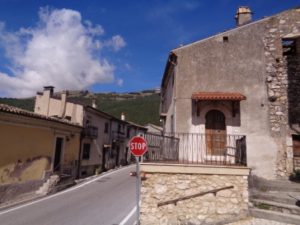
Scorcio di San Potito oggi. (Immagine personale)
In the 1980s, the economy finally took off, and the local tourism industry, linked to mountain sports, began to take off in earnest, rather than merely stuttering. This also led to the development of San Potito, which, aided by the discovery of the Roman imperial villa in its vicinity, enjoyed much greater tourist traffic for a long time. The population began to believe in it, and small local businesses gradually emerged. In short, a period of growth lasted until the early 2000s.
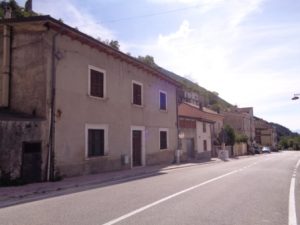
Scorcio di San Potito oggi. (Immagine personale)
This development phase was temporarily interrupted by the 2009 L’Aquila earthquake, which also severely affected San Potito. Many people suddenly found their homes damaged and had to move elsewhere, waiting to return to their homes after they had been restored.
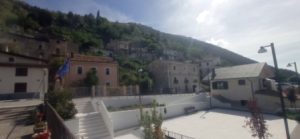
Scorcio di San Potito oggi. (Immagine personale)
Then, n the 2010s, as the houses were gradually renovated, the village began to be repopulated, restoring its previous tranquility. It certainly took several ears for the situation to return to normal, but the population was able to believe and recover, even accepting some painful decisions, such as the re-burying of the imperial villa in 2014. Meanwhile, since the 1990s, San Potito has been part of the new Sirente-Velino regional park, which, despite its ups and downs, has successfully protected the village from real estate speculation.
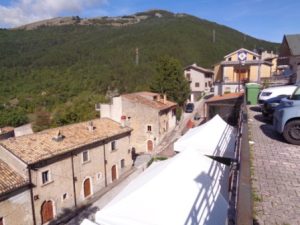
Scorcio di San Potito oggi. (Immagine personale)
Over the years, the park has further consolidated itself, even acting as a driver of economic growth, which has been complemented by the continuation and improvement of Ovindoli’s ski facilities. Today, thanks to this and other efforts, San Potito is a small residential and tourist center. While it remains somewhat secluded from the hustle and bustle of Ovindoli, it has become a pleasant village.
LOCATION OF SAN POTITO
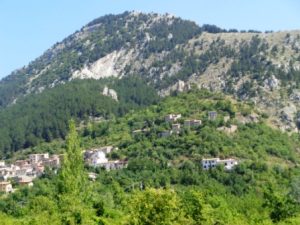
Panoramica sul borgo di San Potito. (Immagine personale)
San Potito enjoys an enviable location, 1,094 meters above sea level, on the slopes of Mount Magnola (2,200 meters), on a hill dominated by Mount Pizzo di Ovindoli (1,181 meters). The village is clearly a mountain village, and at first glance it might seem like a simple transit point on the way to Ovindoli, the area’s true economic hub. However, if you stop to admire it for a moment, you quickly understand the opportunities it offers both to visitors and to those who wish to live here.
WHAT TO SEE IN SAN POTITO.
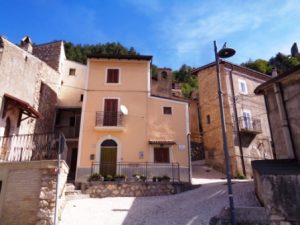
Centro storico di San Potito oggi. (Immagine personale)
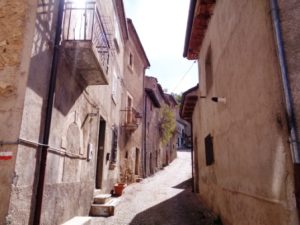
Centro storico di San Potito oggi. (Immagine personale)
San Potito has an enviable historic center, even better in some places than Ovindoli itself. Here you can admire numerous ancient corners, and as you continue climbing through them, you’ll gradually be captivated by the splendid view the village offers of the Fucino plain, but the panoramic views of the mountains beyond San Potito are also noteworthy.
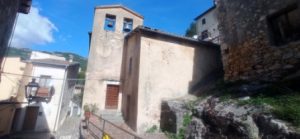
Antica chiesa di Santa Maria della Neve. (Immagine personale)
Going up through the village, you can first admire the ancient parish church of Santa Maria della Neve and, climbing further, after about 30 minutes of walking, you reach the majestic castle.
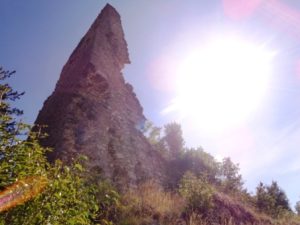
Resti del castello di San Potito. (Immagine personale)
Here, several ancient rooms of the old manor are still visible, which can be admired carefully, paying attention to the vegetation and remembering that you’re in the mountains, where the climate changes rapidly, so you need to come prepared. But what can I say? The view of the village below and the sweeping panorama looking toward the Fucino River is unparalleled and worth the entire hike.
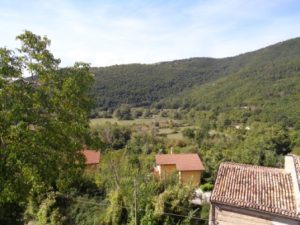
Il pianoro dove è stata rinvenuta l’antica villa imperiale di San Potito. (Immagine personale)
If you’re still hungry for history, descending toward the village, you can visit the small cemetery, near the esplanade where the ancient Roman villa was discovered. Even though you can no longer admire its remains, the place still fascinates you, compelling you to learn more, imagining the presence of a large residential structure that almost served as a village in itself. Here, the allure of history is present everywhere, and of course, the natural setting provides a backdrop that deserves a special mention.
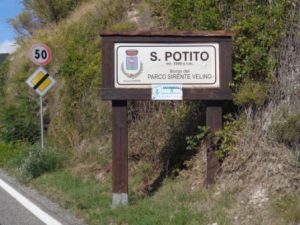
(Immagine personale)
In addition to visiting the ancient village, San Potito offers unspoiled nature, protected within the Velino Sirente Regional Park. Surrounded by beech forests, mountain meadows, and breathtaking views overlooking the Ovindoli and Fucino plains, this small village is a perfect example of harmony between man and nature, history and landscape.
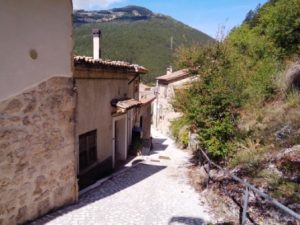
Scorcio del centro storico di San Potito. (Immagine personale)
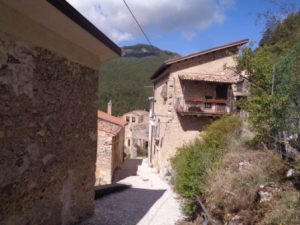
Scorcio del centro storico di San Potito. (Immagine personale)
In San Potito, time seems to have stood still: the ancient stone streets, the narrow lanes, the pure mountain air, and the almost sacred silence of the landscape surrounding the village make this a fairytale place, offering tourists an authentic experience, far from the beaten tourist track.
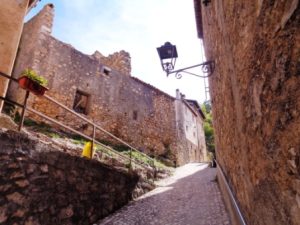
Scorcio del centro storico di San Potito. (Immagine personale)
San Potito isn’t just a place to admire, but an experience to be slowly savoured, savoring the local delicacies. This way, you can sample the village’s thousand-year history while also experiencing a unique natural setting.
WHAT TO DO IN SAN POTITO
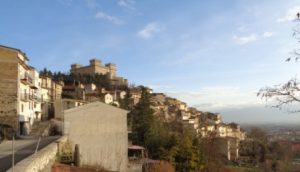
Panoramica su San Potito. (Immagine personale)
San Potito’s location is strategic: at approximately 1100 meters above sea level, it is an ideal starting point for excursions on foot, by bike, or on horseback into the surrounding mountains, following the numerous existing trails and crossing the magnificent forests in the area.
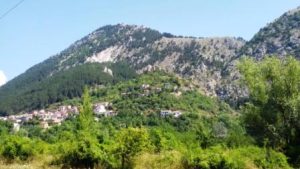
I monti intorno a San Potito. (Immagine personale)
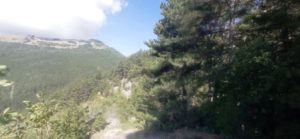
Please note that the town is located within a large park, so there is a real possibility of spotting local wildlife such as wolves, foxes, deer, eagles, and vultures.
Scorcio del bosco intorno a San Potito. (Immagine personale)
If you’d like to explore other natural sites, you can hire nature guides to explore Mount Sirente and Mount Velino, as well as the many other natural sites in this corner of Marsica.
Celano oggi. (Immagine personale)
The town is also an excellent base for visiting and experiencing nearby towns rich in history and culture, such as Celano, Rocca di Mezzo, and of course Ovindoli.
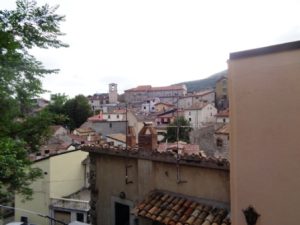
Scorcio di Ovindoli oggi. (Immagine personale)
In winter, the village’s proximity to the center of Ovindoli and the Monte Magnola ski resort makes it a quiet and affordable retreat for snow lovers. Here, you can enjoy a variety of winter sports, such as snowshoeing and winter hiking.
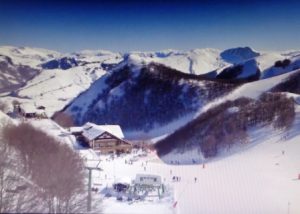
Impianti sciistici del Monte Magnola.
In summer, however, it’s the perfect base for escaping the summer heat, which can be intense during the day but gives way to a cool climate at night, allowing for a good night’s sleep and a hearty breakfast the next morning. It’s an excellent base for discovering the natural treasures of the Velino-Sirente Park, both for its flora and fauna and its geological environment, such as the nearby Celano Gorge or the famous Stiffe Caves, just a few kilometers from San Potito.
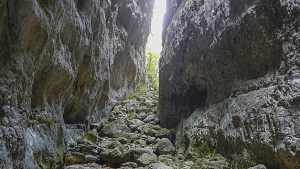
Le gole di Celano. (Immagine da https://www.isprambiente.gov.it/it/attivita/museo/regioni/musei/gole-di-celano)
In summer, in addition to trekking, you can enjoy various sports such as cycling, horseback riding, and rock climbing.
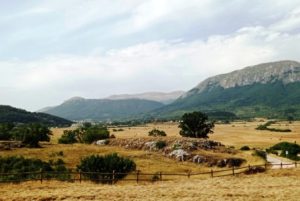
Scorcio dell’Altopiano delle Rocche. (Immagine personale)
San Potito also serves as a gateway to discovering the Rocche Plateau, one of the most beautiful areas of the entire Marsica region and of Abruzzo itself.
WHAT TO EAT IN SAN POTITO

Let’s not forget one important thing: the food here is excellent. Simply step into any of the restaurants in Ovindoli to enjoy magnificent appetizers of locally produced cured meats, salamis, hams, and cheeses, followed by first and second courses featuring a wide variety of meats, from pork and chicken to turkey, mutton, and beef, cooked in a variety of ways, sure to satisfy every palate.
The rich mountain cuisine of Marsican cuisine is a first for many; while not among the most famous, it is certainly among the tastiest. The local cuisine is a cuisine of simple, tasty dishes, true to tradition. Equally traditional are the local desserts and liqueurs, numerous and hearty. Try it and believe it.
WHY COME AND LIVE IN SAN POTITO
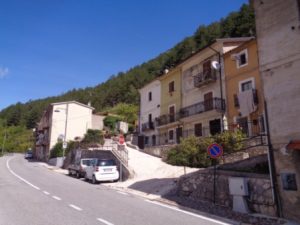
Scorcio di San Potito oggi. (Immagine personale)
San Potito, besides being a tourist destination, is also a residential village. Thanks to new technologies, it’s possible to stay connected at all times, making it possible to live there with everything you need.
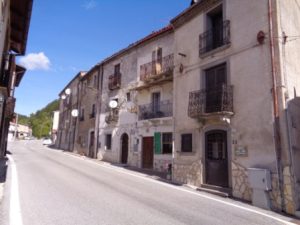
Scorcio di San Potito oggi. (Immagine personale)
Thanks to San Potito’s proximity to several important villages, it’s possible to participate in the local nightlife, which, although small, is still present year-round, especially between spring and autumn, which is expressed through the many local festivals and events held in this corner of the Marsica.
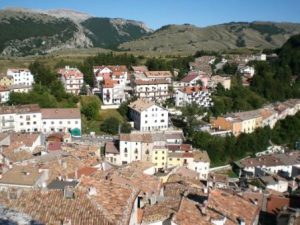
Scorcio di Ovindoli oggi. (Immagine personale)
Let’s not forget that nearby Ovindoli, an international ski resort, also attracts foreign visitors, who, thanks to the pubs and restaurants, make the village lively.